
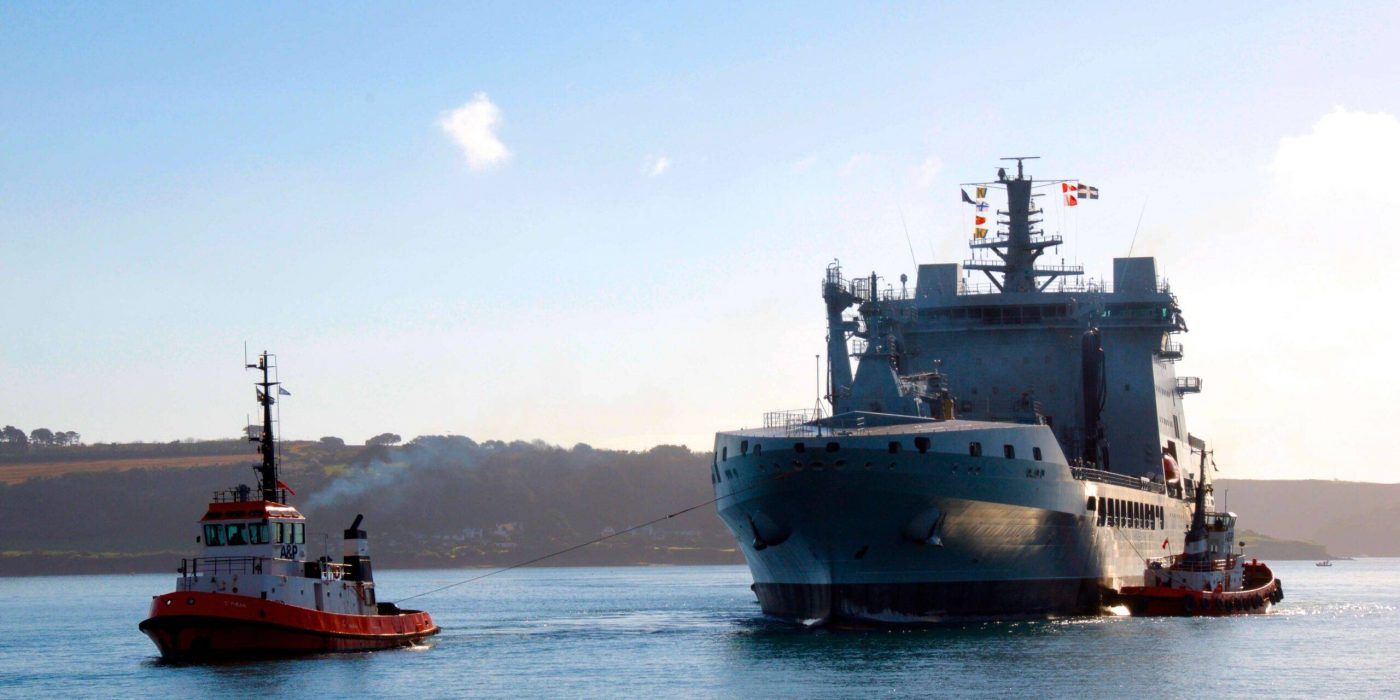
The rope on your towline is not a commodity purchase. Here is what the performance data means, where the commercial marine sector has moved, and how to choose between a coated 12-strand HMPE and a jacketed construction for your specific application.
There is a moment in every tug operation where everything depends on the rope. The master has committed the vessel. The towline is under load. Whatever is in that line: its construction, its fibre grade, its service history — is the only thing connecting the tug’s power to the ship’s hull.
Most procurement decisions around towlines happen well before that moment and well away from the quayside. They happen in offices, against budgets, with a specification document and a set of quotes. The gap between those two contexts, the desk and the deck, is where poor specification decisions get made, and where the consequences are felt by people who had no part in making them.
This guide is written for procurement managers responsible for fibre rope in commercial tug and port applications. It does not assume prior knowledge of rope construction. It does assume you are making a real decision and would prefer to make it well.
Why MBL is not enough
Every rope has a minimum break load. It is the figure that anchors the specification, satisfies the auditor, and appears on the data sheet. It is also, on its own, an incomplete basis for procurement.
Two ropes can carry identical MBL figures and behave entirely differently in service. The differences show up in how the rope handles under sustained load, how it wears against fairleads, how it responds when the tug makes a sudden change of direction, and critically what happens if it parts.
For tug and port operations, the performance characteristics that determine real-world value and safety over a rope’s working life include:
Tug work demands precision. A highly elastic rope stores energy under load and releases it unpredictably, reducing the master’s ability to control the vessel during berthing. Low-elongation HMPE rope — typically 3–4% at working loads gives the handling crew a line that responds as it should.
A parted rope under tension releases stored energy instantly. The greater the elongation at failure, the more dangerous that release. This is the mechanism behind snap-back incidents, which remain one of the leading causes of serious injury in commercial towing. HMPE’s very low elongation gives it a materially better recoil profile than polyester or polypropylene alternatives. Choosing the right material is a genuine safety decision, not a specification formality.
A sinking line around a propeller is not an operational inconvenience it is a vessel out of service and potentially a collision risk in a busy port approach. HMPE floats. For tug applications this is not a feature; it is a baseline requirement.
Ropes that absorb water gain weight, change stiffness, and in colder conditions can freeze in ways that compromise spliced terminations and drum handling. Hydrophobic fibre constructions maintain consistent performance wet or dry. On a vessel working year-round in UK coastal conditions, this matters.
All ropes deform under sustained tension. In HMPE constructions, the manufacturing process significantly affects how much creep occurs over time. Heat-set fibre reduces creep, which is relevant for pennants and any application where the line is held under load for extended periods rather than worked dynamically.
The case for HMPE in commercial towing
| 15× Stronger than steel by weight |
3–4% Elongation at working load |
Floats No propeller fouling risk |
0% Corrosion maintenance |
High-modulus polyethylene — HMPE, sometimes referenced by the trade fibre name Dyneema by DSM— has been the direction of travel in commercial marine rope specification for decades now. The adoption in UK ports and tug fleets has not been uniform, but the direction is clear.
The core arguments are straightforward. HMPE is approximately 15 times stronger than steel by weight, floats, does not corrode, and presents a significantly lower recoil risk than steel wire on failure. A well-managed HMPE towline will also typically outperform steel wire on service life when the comparison accounts for the full cost of steel: corrosion treatment, the weight crews handle every time the line is worked, and the maintenance overhead of managing a wire that degrades from the inside out.
The objection most commonly raised is initial cost. HMPE rope costs more per metre than steel wire or polyester. That comparison is accurate at the point of purchase and misleading over any meaningful service period. The relevant question is not what the rope costs to buy, but what it costs to operate — and what it costs when it fails.
Two constructions for two sets of conditions
Southern Ropes manufactures two HMPE towline products for commercial marine and tug applications. They share the same core fibre technology — Stealth Fibre®, a heat-treated UHMwPE manufactured to Southern Ropes’ own specification — and they address different operating environments. Understanding the difference is the starting point for specifying correctly.
Choosing between them
Both products are proven in commercial tug and port applications. The question is which construction is better matched to your operating environment and how you manage your rope inventory.
If your hardware is in good condition, your fairleads are well-maintained, and you have a managed inspection and retirement programme, Super 12 will serve you well across the full diameter range.
If your application involves sustained contact with abrasive surfaces, older port infrastructure, or conditions where surface wear is your primary failure mode, Superline’s braided jacket extends service life at the cost of a modest increase in finished diameter.
If you are unsure which applies to your operation, talk to us. We can advise based on your hardware, your operating pattern, and what you have seen from previous rope deployments.
Total cost of ownership: the number that matters
Purchase price per metre is a ratio that procurement teams understand and auditors can verify. It is also the least useful number in the room when making a well-informed decision about towline specification.
The number that matters is the cost of the rope over its operational life including the labour of replacement, the cost of unplanned downtime if a line parts or is retired early, the maintenance overhead of whatever material you are running, and the risk cost of operating with equipment that is not correctly specified for the application.
HMPE towlines, properly specified and managed, return their cost premium within the first service period in the majority of applications when compared against steel wire on a full cost basis. They eliminate corrosion maintenance, reduce the physical load on handling crews, and have a demonstrably better safety profile on failure.
We are happy to work through that calculation with procurement teams directly. We have done it with tug operators and port authorities across the UK, and we can provide application-specific guidance based on your vessels, your hardware, and your operating pattern.
Talk to us about your towline requirements
Southern Ropes supplies commercial marine operations across the UK from our base in Hampshire. We stock Super 12 and Superline across the working diameter range and can supply to cut lengths, on reel, or as finished assemblies with end terminations.
We are not a catalogue operation. If you are specifying towlines for tug or port use and want a recommendation you can stand behind, get in touch.
| Contact our team | Request a quote | Super 12 | Superline |
Southern Ropes UK — Hampshire-based rope specialists supplying commercial marine, offshore, lifting, and industrial sectors.
