
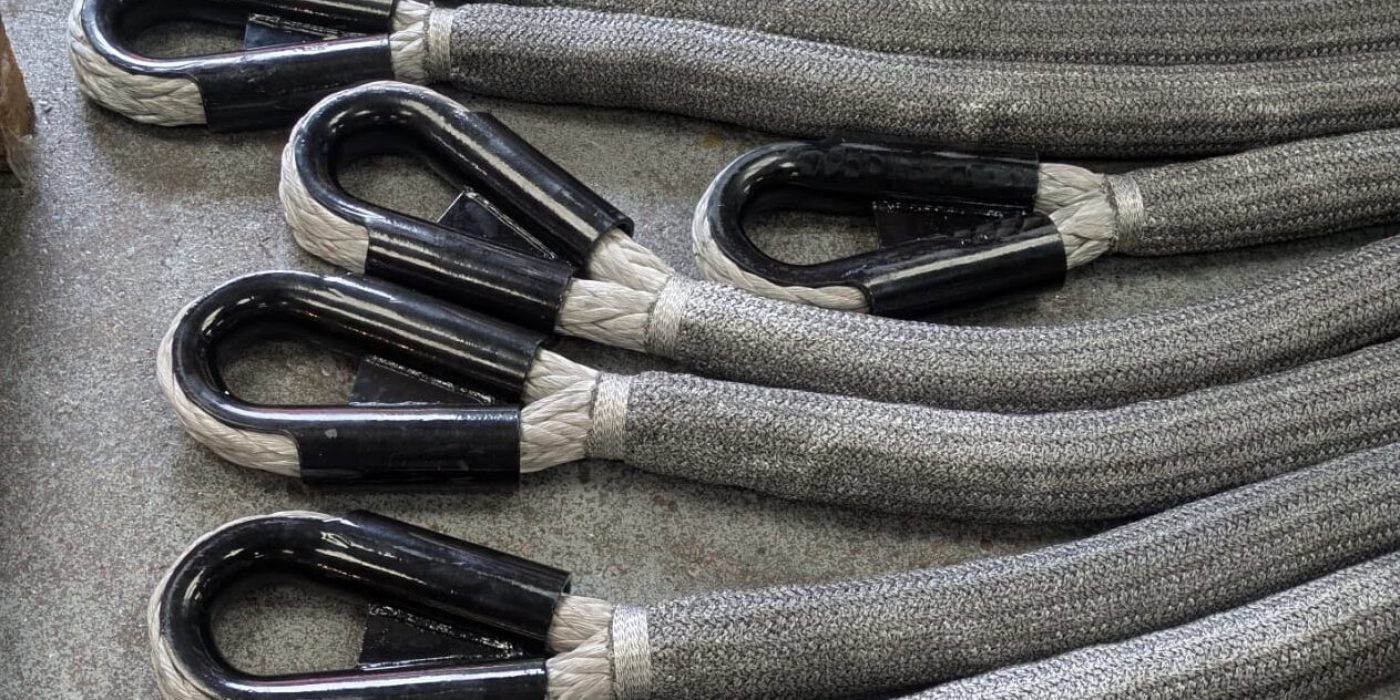
How to Splice Rope: A Step-by-Step Guide for 3-Strand and Braided Rope
A splice is the strongest and neatest way to put a permanent eye, join or finished end into a rope. Done properly, a splice retains close to the full rated strength of the rope, where a knot can lose a significant proportion of it. That is why riggers, vessel crews and rope access technicians splice rather than tie whenever a termination has to be relied upon.
This guide walks through how to splice rope across the three constructions Southern Ropes UK works with most: three-strand (laid) rope, double braid, and a back splice for finishing an end. It is written for crews, riggers and anyone specifying or terminating commercial marine rope who wants the job done to a standard that holds under load.
Why splice a rope instead of tying a knot?
A well made splice typically retains around 90 percent or more of a rope’s rated break load. A knot, by contrast, introduces a tight bend and a pinch point that can reduce the rope’s effective strength by anywhere from 20 to 50 percent, depending on the knot. For any permanent or load critical termination, the splice is the stronger, safer choice.
A splice also sits flush with the rope, runs cleanly through blocks, sheaves and fairleads, and resists working loose under cyclical load in a way a knot does not. The trade off is that it is permanent and takes longer to make, so a knot still has its place for temporary or adjustable terminations.
Splice for: permanent eyes, mooring and dock lines, halyards and sheets, lifting and recovery assemblies, soft shackles, and any termination that stays in place.
Use a knot for: temporary lashings, adjustable lines, and anything you need to undo quickly.
What tools do you need to splice rope?
Three-strand rope can be spliced with very little kit. Braided constructions need a fid set sized to the rope.
- A fid. A tapered tool for opening the rope and guiding strands through. A Swedish fid suits three-strand; a tubular or push-fid set is needed for double braid.
- A sharp knife or scissors for clean cuts.
- Whipping twine or tape to seal strand ends and stop them unravelling.
- A marker pen for measuring and marking the rope.
The right method depends on how the rope is constructed. Three-strand is the easiest to learn; double braid and hollow single-braid HMPE such as Super-12® each use a different technique. If you are unsure of the construction, check the product page or the spec before you start.
How do you splice a three-strand eye splice?
The three-strand eye splice forms a permanent loop in the end of a laid rope. It is the foundation of all splicing and the right place to start. The principle is simple: each loose strand is tucked back through the standing part, against the lay, over one strand and under the next.
Step 1. Unlay and tape the strands. Measure back about 10 to 12 turns of the lay from the end and tape the rope at that point so it cannot unravel further. Untwist the three strands back to the tape, then tape or whip the end of each individual strand so it does not fray.
Step 2. Form the eye and make the first tuck. Bend the rope to create a loop the size you need. Lay the three loose strands across the standing part. Take the middle strand and tuck it under one strand of the standing part, working against the lay (against the direction of the twist). Pull it snug.
Step 3. Tuck the second and third strands. Take the left-hand strand and tuck it under the next standing strand along, again against the lay. Turn the whole splice over and tuck the third strand under the remaining standing strand. Each of the three standing strands should now have one tucked strand emerging from beneath it. Check this first round carefully before continuing.
Step 4. Continue: over one, under one. Working each strand in turn, tuck it over the next standing strand and under the one after, against the lay. Keep the tension even across all three. Complete four to five full rounds of tucks for natural fibre, and at least five for slippery synthetics.
Step 5. Taper, roll and trim. For a neater, stronger finish, taper the final tuck or two by halving the yarns in each strand. Roll the finished splice underfoot or between your hands to bed it in, then trim the protruding ends close to the rope, but not flush.
Loaded up, a correctly made eye splice will hold close to the full strength of the rope.
How do you splice double braid rope?
Double braid is the workhorse of modern rope, but its core-and-cover construction makes splicing more involved. The principle is that the core is buried inside the cover and the cover inside the core, so that under load the splice grips itself tighter. A fid set matched to the rope diameter is essential, as the method relies on precise measurements.
Step 1. Measure and mark. Following the measurements for your fid set and rope, mark the extraction point, the eye size and the bury length along the rope. Accurate marks are the difference between a clean splice and a failed one.
Step 2. Extract the core. Open the cover at the marked point and draw the core out, then mark the core where it emerges.
Step 3. Bury the cover into the core. Taper the end of the cover and, using the fid, thread it down inside the hollow core for the marked bury length.
Step 4. Bury the core back into the cover. Reinsert the core into the cover so the two interlock, forming the eye.
Step 5. Milk the cover and lock the throat. Smooth, or milk, the cover firmly back over the buried section so the crossover disappears inside. Whip or stitch-lock the throat of the eye for security.
Because double braid method and measurements are specific to the rope and fid set, always follow the manufacturer’s figures for your exact rope. Southern Ropes UK also produces spliced terminations to specification if you would rather have the work done for you.
How do you finish a rope end with a back splice?
A back splice seals the end of a three-strand rope so it cannot fray, without tape or heat. The one limitation is that it thickens the rope end, so it should not be used on any rope that needs to pass through a block or fairlead.
Step 1. Form a crown knot. Unlay the three strands a short way. Fold each strand over its neighbour in turn to form a crown knot, and draw it down snug at the end of the rope.
Step 2. Tuck back down the rope. From the crown, tuck each strand back down the standing part, over one and under one, against the lay, exactly as in the eye splice.
Step 3. Repeat and trim. Complete three to four tucks, roll the splice to bed it in, and trim the ends.
For ropes that must run freely through hardware, a whipping is the better end finish, but the back splice is the more robust of the two.
What are the most common splicing mistakes?
Most splicing problems come down to a handful of repeat offenders:
Tucking with the lay instead of against it. Always tuck against the direction of twist, or the splice will work loose under load.
Too few tucks. Synthetics are slippery, and skimping on tucks is the most common cause of a splice that slips. Five full tucks is a safe minimum for synthetic rope.
Uneven tension. If one strand is pulled tighter than the others, the load will not share evenly and the splice will distort.
Getting the first round wrong. A muddled first set of tucks throws out everything that follows. Stop and check it before continuing.
Cutting the tails flush. Trim close but leave a few millimetres, or the tails can pull back inside under load.
How much strength does a splice keep compared to a knot?
The figures below are general guidance for rope in good condition with a correctly made termination. Always specify to Safe Working Load, not break load, and apply an appropriate design factor for the application.
| Termination | Approx. strength retained | Best use |
|---|---|---|
| Eye splice (correctly made) | Around 90% or more | Permanent eyes, mooring, lifting |
| Back splice | End finish only (not load-rated) | Sealing a rope end |
| Typical knot | Around 50 to 80% | Temporary, adjustable lines |
Frequently asked questions
Are splices stronger than knots?
Yes. A properly made splice retains around 90 percent or more of a rope’s rated strength, whereas a knot can reduce it by 20 to 50 percent because of the tight bend it forces into the fibres. For any permanent or load-critical termination, a splice is the stronger and safer choice.
How do you splice rope for beginners?
Start with a three-strand eye splice on a piece of natural-fibre offcut, where the strands are easy to see and handle. Unlay three strands, tuck each one under a strand of the standing part against the lay, then repeat over one, under one for four to five full rounds. Practise on scrap before doing it for real.
How do you splice two pieces of rope together?
Two ropes of the same construction can be joined with a long splice or a short splice, interweaving the strands of each rope into the other. A short splice is stronger and quicker but adds bulk; a long splice keeps the diameter close to the original so it can still run through a block.
What rope can be spliced?
Most ropes can be spliced, but the method varies by construction: three-strand, double braid and hollow single-braid such as HMPE each use a different technique. Tightly braided or coated ropes are harder to splice and may need specialist tools.
Do you need special tools to splice rope?
For three-strand rope you can manage with a fid, a knife and some tape. Double braid and hollow braids really do need a correctly sized fid set, as the method relies on burying strands inside the rope to precise measurements.
Need professional splicing or custom rope assemblies?
Southern Ropes UK produces spliced terminations and made-to-order rope assemblies for marine, offshore, rope access, lifting and industrial use, in any construction and diameter we manufacture. Bespoke eyes, splices, lengths and protective covers are available to specification. Use the rope finder to narrow down by sector, fibre and diameter, or tell the sales team your application and load requirements at the point of enquiry.
